Understanding customer needs and producing rust-free air rails is the secret to our leadership!
Straightness, Twist
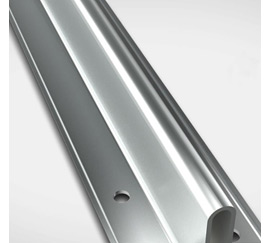
Hollow guide rails are generally used as counterweight guide rails, providing guidance for the counterweight device during elevator operation. Defects can cause the counterweight device to sway, affecting the smoothness of the car’s operation and thus impacting comfort. Unstable operation of the counterweight device can also cause the traction ropes to slip or even derail, affecting the safe operation of the elevator.
Verticality
End face perpendicularity refers to the perpendicularity between the guide rail end face and the bottom surface. The national standard requires ≤0.2mm.
Perpendicularity affects connection accuracy, thus impacting the operational stability of the counterweight device.
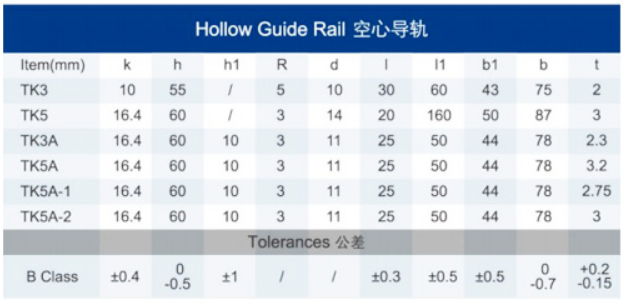
Guide rail model
Guide rail naming follows national standards. T indicates T-type guide rail, K indicates hollow steel section, the number indicates weight per meter, and A indicates with flange; if no flange, it is omitted. For example, TK3A, TK5A, TK3, and TK5.
Zinc plating
The surface of the guide rail is galvanized for rust prevention; corrosion of the guide rail will prevent the guide shoes from functioning properly. Severe corrosion can even reduce the strength of the guide rail, threatening safe operation.